 Add to Chrome
 Add to Firefox
 Add to Edge
Dialectics of Alignment: Harnessing Unsafe Knowledge for Dynamic Safety Routing
May 30, 2026
The prevailing paradigm in large language model (LLM) alignment operates via erasure, filtering unsafe data or training models to strictly refuse harmful prompts. While effective at reducing immediate toxicity, this approach fundamentally constricts the model's epistemological scope, resulting in over-cautious systems that output uninformative blanket refusals to sensitive yet benign queries. In this work, we challenge the orthodoxy that unsafe data must be discarded. We propose a dialectical approach to alignment, positing that unsafe data encodes rich, domain specific knowledge critical for nuanced, safe, and informative generation. To operationalize this, we introduce SafeMoE, a Mixture-of-Experts (MoE) framework that isolates unsafe knowledge into domain-specific Low-Rank Adapters (LoRA experts) trained exclusively on harmful corpora. To synthesize safety from these unsafe primitives, we train a lightweight gating network using a minimal, highly curated set of safe-informative responses. During inference, this router dynamically orchestrates the unsafe experts, effectively steering the generation trajectory to harness their deep domain knowledge while strictly enforcing safety constraints. Extensive empirical evaluations across stringent safety benchmarks demonstrate that SafeMoE is not only safer, achieving over a 20% relative improvement in safe response rate (more than a 15% absolute gain), but also produces more informative responses when safety and harmfulness are of paramount concern. Furthermore, the routing mechanism exhibits strong zero-shot generalization to unseen domains and broader safety tasks without domain-specific supervision. Our findings suggest a paradigm shift in alignment: true safety requires not the masking of unsafe knowledge, but its controlled integration.

Herculean: An Agentic Benchmark for Financial Intelligence
May 14, 2026As AI agents improve, the central question is no longer whether they can solve isolated well-defined financial tasks, but whether they can reliably carry out financial professional work. Existing financial benchmarks offer only a partial view of this ability, as they primarily evaluate static competencies such as question answering, retrieval, summarization, and classification. We introduce Herculean, the first skilled benchmark for agentic financial intelligence spanning four representative workflows, including Trading, Hedging, Market Insights, and Auditing. Each workflow is instantiated as a standardized MCP-based skill environment with its own tools, interaction dynamics, constraints, and success criteria, enabling consistent end-to-end assessment of heterogeneous agent systems. Across frontier agents, we find agents perform relatively well on Trading and Market Insights, but struggle substantially on Hedging and Auditing, where long-horizon coordination, state consistency, and structured verification are critical. Overall, our results point to a key gap in current agents in turning financial reasoning into dependable workflow execution in high-stakes financial workflows.
AgentSPEX: An Agent SPecification and EXecution Language
Apr 14, 2026Language-model agent systems commonly rely on reactive prompting, in which a single instruction guides the model through an open-ended sequence of reasoning and tool-use steps, leaving control flow and intermediate state implicit and making agent behavior potentially difficult to control. Orchestration frameworks such as LangGraph, DSPy, and CrewAI impose greater structure through explicit workflow definitions, but tightly couple workflow logic with Python, making agents difficult to maintain and modify. In this paper, we introduce AgentSPEX, an Agent SPecification and EXecution Language for specifying LLM-agent workflows with explicit control flow and modular structure, along with a customizable agent harness. AgentSPEX supports typed steps, branching and loops, parallel execution, reusable submodules, and explicit state management, and these workflows execute within an agent harness that provides tool access, a sandboxed virtual environment, and support for checkpointing, verification, and logging. Furthermore, we provide a visual editor with synchronized graph and workflow views for authoring and inspection. We include ready-to-use agents for deep research and scientific research, and we evaluate AgentSPEX on 7 benchmarks. Finally, we show through a user study that AgentSPEX provides a more interpretable and accessible workflow-authoring paradigm than a popular existing agent framework.
One-step Language Modeling via Continuous Denoising
Feb 18, 2026Language models based on discrete diffusion have attracted widespread interest for their potential to provide faster generation than autoregressive models. In practice, however, they exhibit a sharp degradation of sample quality in the few-step regime, failing to realize this promise. Here we show that language models leveraging flow-based continuous denoising can outperform discrete diffusion in both quality and speed. By revisiting the fundamentals of flows over discrete modalities, we build a flow-based language model (FLM) that performs Euclidean denoising over one-hot token encodings. We show that the model can be trained by predicting the clean data via a cross entropy objective, where we introduce a simple time reparameterization that greatly improves training stability and generation quality. By distilling FLM into its associated flow map, we obtain a distilled flow map language model (FMLM) capable of few-step generation. On the LM1B and OWT language datasets, FLM attains generation quality matching state-of-the-art discrete diffusion models. With FMLM, our approach outperforms recent few-step language models across the board, with one-step generation exceeding their 8-step quality. Our work calls into question the widely held hypothesis that discrete diffusion processes are necessary for generative modeling over discrete modalities, and paves the way toward accelerated flow-based language modeling at scale. Code is available at https://github.com/david3684/flm.
Beyond Hard Writes and Rigid Preservation: Soft Recursive Least-Squares for Lifelong LLM Editing
Jan 22, 2026Model editing updates a pre-trained LLM with new facts or rules without re-training, while preserving unrelated behavior. In real deployment, edits arrive as long streams, and existing editors often face a plasticity-stability dilemma: locate-then-edit "hard writes" can accumulate interference over time, while null-space-style "hard preservation" preserves only what is explicitly constrained, so past edits can be overwritten and unconstrained behaviors may deviate, degrading general capabilities in the many-edits regime. We propose RLSEdit, a recursive least-squares editor for long sequential editing. RLSEdit formulates editing as an online quadratic optimization with soft constraints, minimizing a cumulative key-value fitting objective with two regularizers that control for both deviation from the pre-trained weights and from a designated anchor mapping. The resulting update admits an efficient online recursion via the Woodbury identity, with per-edit cost independent of history length and scaling only with the current edit size. We further provide deviation bounds and an asymptotic characterization of the adherence-preservation trade-off in the many-edits regime. Experiments on multiple model families demonstrate stable scaling to 10K edits, outperforming strong baselines in both edit success and holistic stability -- crucially retaining early edits, and preserving general capabilities on GLUE and held-out reasoning/code benchmarks.
Investigating the Multilingual Calibration Effects of Language Model Instruction-Tuning
Jan 04, 2026Ensuring that deep learning models are well-calibrated in terms of their predictive uncertainty is essential in maintaining their trustworthiness and reliability, yet despite increasing advances in foundation model research, the relationship between such large language models (LLMs) and their calibration remains an open area of research. In this work, we look at a critical gap in the calibration of LLMs within multilingual settings, in an attempt to better understand how the data scarcity can potentially lead to different calibration effects and how commonly used techniques can apply in these settings. Our analysis on two multilingual benchmarks, over 29 and 42 languages respectively, reveals that even in low-resource languages, model confidence can increase significantly after instruction-tuning on high-resource language SFT datasets. However, improvements in accuracy are marginal or non-existent, resulting in mis-calibration, highlighting a critical shortcoming of standard SFT for multilingual languages. Furthermore, we observe that the use of label smoothing to be a reasonable method alleviate this concern, again without any need for low-resource SFT data, maintaining better calibration across all languages. Overall, this highlights the importance of multilingual considerations for both training and tuning LLMs in order to improve their reliability and fairness in downstream use.
Audited Skill-Graph Self-Improvement for Agentic LLMs via Verifiable Rewards, Experience Synthesis, and Continual Memory
Dec 28, 2025Reinforcement learning is increasingly used to transform large language models into agentic systems that act over long horizons, invoke tools, and manage memory under partial observability. While recent work has demonstrated performance gains through tool learning, verifiable rewards, and continual training, deployed self-improving agents raise unresolved security and governance challenges: optimization pressure can incentivize reward hacking, behavioral drift is difficult to audit or reproduce, and improvements are often entangled in opaque parameter updates rather than reusable, verifiable artifacts. This paper proposes Audited Skill-Graph Self-Improvement (ASG-SI), a framework that treats self-improvement as iterative compilation of an agent into a growing, auditable skill graph. Each candidate improvement is extracted from successful trajectories, normalized into a skill with an explicit interface, and promoted only after passing verifier-backed replay and contract checks. Rewards are decomposed into reconstructible components derived from replayable evidence, enabling independent audit of promotion decisions and learning signals. ASG-SI further integrates experience synthesis for scalable stress testing and continual memory control to preserve long-horizon performance under bounded context. We present a complete system architecture, threat model, and security analysis, and provide a fully runnable reference implementation that demonstrates verifier-backed reward construction, skill compilation, audit logging, and measurable improvement under continual task streams. ASG-SI reframes agentic self-improvement as accumulation of verifiable, reusable capabilities, offering a practical path toward reproducible evaluation and operational governance of self-improving AI agents.
Sublinear iterations can suffice even for DDPMs
Nov 06, 2025SDE-based methods such as denoising diffusion probabilistic models (DDPMs) have shown remarkable success in real-world sample generation tasks. Prior analyses of DDPMs have been focused on the exponential Euler discretization, showing guarantees that generally depend at least linearly on the dimension or initial Fisher information. Inspired by works in log-concave sampling (Shen and Lee, 2019), we analyze an integrator -- the denoising diffusion randomized midpoint method (DDRaM) -- that leverages an additional randomized midpoint to better approximate the SDE. Using a recently-developed analytic framework called the "shifted composition rule", we show that this algorithm enjoys favorable discretization properties under appropriate smoothness assumptions, with sublinear $\widetilde{O}(\sqrt{d})$ score evaluations needed to ensure convergence. This is the first sublinear complexity bound for pure DDPM sampling -- prior works which obtained such bounds worked instead with ODE-based sampling and had to make modifications to the sampler which deviate from how they are used in practice. We also provide experimental validation of the advantages of our method, showing that it performs well in practice with pre-trained image synthesis models.
AAGATE: A NIST AI RMF-Aligned Governance Platform for Agentic AI
Oct 29, 2025This paper introduces the Agentic AI Governance Assurance & Trust Engine (AAGATE), a Kubernetes-native control plane designed to address the unique security and governance challenges posed by autonomous, language-model-driven agents in production. Recognizing the limitations of traditional Application Security (AppSec) tooling for improvisational, machine-speed systems, AAGATE operationalizes the NIST AI Risk Management Framework (AI RMF). It integrates specialized security frameworks for each RMF function: the Agentic AI Threat Modeling MAESTRO framework for Map, a hybrid of OWASP's AIVSS and SEI's SSVC for Measure, and the Cloud Security Alliance's Agentic AI Red Teaming Guide for Manage. By incorporating a zero-trust service mesh, an explainable policy engine, behavioral analytics, and decentralized accountability hooks, AAGATE provides a continuous, verifiable governance solution for agentic AI, enabling safe, accountable, and scalable deployment. The framework is further extended with DIRF for digital identity rights, LPCI defenses for logic-layer injection, and QSAF monitors for cognitive degradation, ensuring governance spans systemic, adversarial, and ethical risks.
Lifetime-Aware Design of Item-Level Intelligence
Sep 09, 2025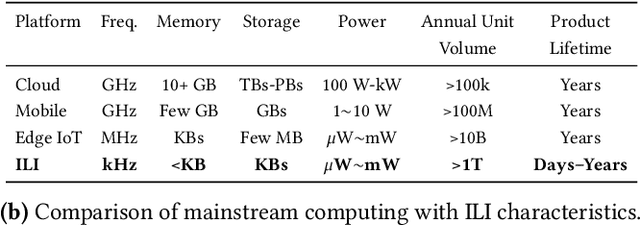
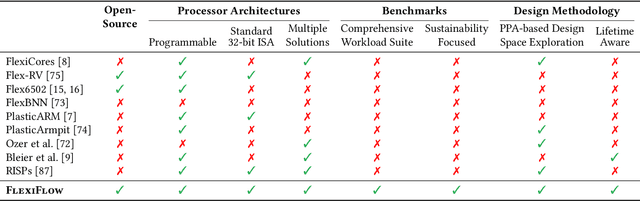
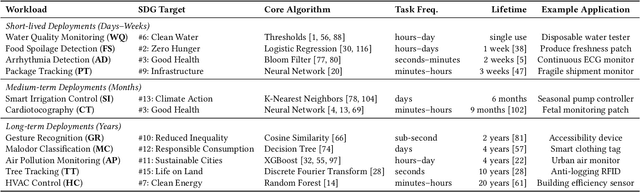
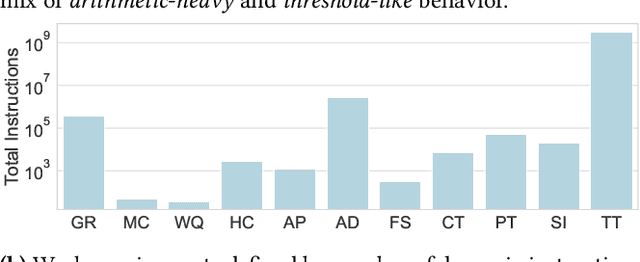
We present FlexiFlow, a lifetime-aware design framework for item-level intelligence (ILI) where computation is integrated directly into disposable products like food packaging and medical patches. Our framework leverages natively flexible electronics which offer significantly lower costs than silicon but are limited to kHz speeds and several thousands of gates. Our insight is that unlike traditional computing with more uniform deployment patterns, ILI applications exhibit 1000X variation in operational lifetime, fundamentally changing optimal architectural design decisions when considering trillion-item deployment scales. To enable holistic design and optimization, we model the trade-offs between embodied carbon footprint and operational carbon footprint based on application-specific lifetimes. The framework includes: (1) FlexiBench, a workload suite targeting sustainability applications from spoilage detection to health monitoring; (2) FlexiBits, area-optimized RISC-V cores with 1/4/8-bit datapaths achieving 2.65X to 3.50X better energy efficiency per workload execution; and (3) a carbon-aware model that selects optimal architectures based on deployment characteristics. We show that lifetime-aware microarchitectural design can reduce carbon footprint by 1.62X, while algorithmic decisions can reduce carbon footprint by 14.5X. We validate our approach through the first tape-out using a PDK for flexible electronics with fully open-source tools, achieving 30.9kHz operation. FlexiFlow enables exploration of computing at the Extreme Edge where conventional design methodologies must be reevaluated to account for new constraints and considerations.